A claim file before you write
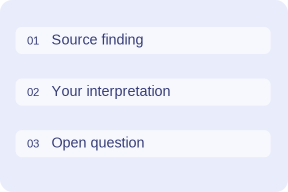
Identify one main claim for each paragraph. Alongside it, record the supporting source, the relevant section and any counterevidence. Preparing a reference list alone does not show that every sentence is supported.
Identify the type of text
A research report, review, critical essay and student assignment do not have to follow the same structure. Read the current instructions of the target journal or institution. The open APA Style resources provide examples for the seventh edition; your institution may require another format.
How to use archived guides
The archived Academic Writing Rules booklet is historical educational material. Keep its publication date, citation-style edition and the rules of the journal you intend to submit to separate. Do not automatically present an old example as the current standard.
Before submission
- Does every in-text citation have a corresponding reference?
- Does every reference identify a work actually used?
- Are quotations distinguished from your interpretation?
- Do the DOI, title, authors and date match the primary record?
- Are data, ethical procedures and AI use disclosed where required?
Continue with the reference checking guide. Do not use a formatting generator in place of a final check: it may write an incorrect record with perfect punctuation.
AI and writing
Sources and provenance
Source check / web edition: 14 October 2026. Historical documents retain their own original dates.